
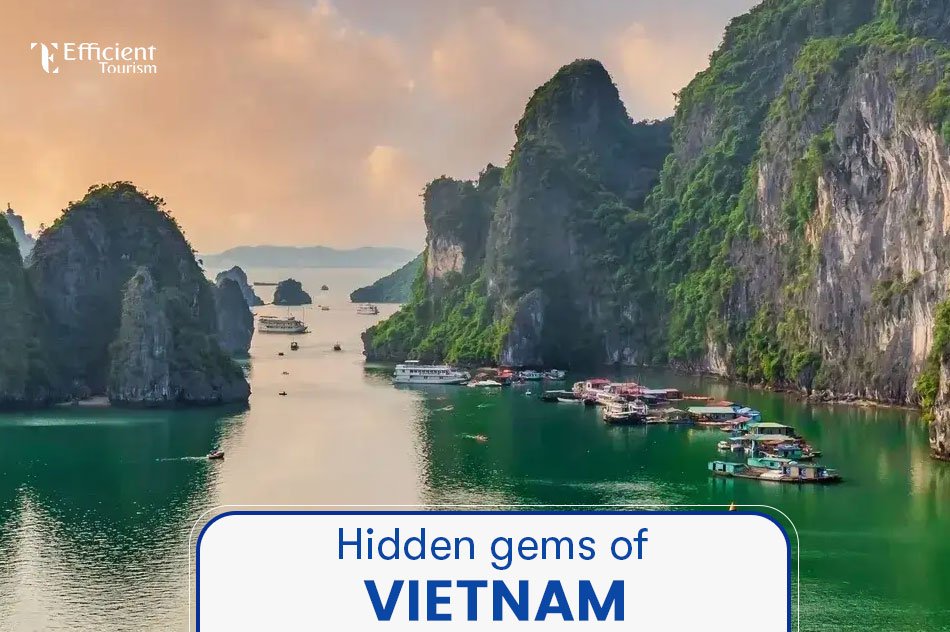
In Vietnam, there is no shortage of nature spots where solo travellers or any tourist can explore and spend their holidays. Though places like Hanoi, Ha Long Bay and Ho Chi Minh City are most popular among the tourists for their scenery and well-made tourist trails, there are many off the beaten paths in Vietnam that are as appealing and are less-crowded often considered the hidden gems of Vietnam.
Hidden Gems of Vietnam
Below is the list of hidden gems of Vietnam that travellers should explore.
-
Son Doong Cave
Known as the world’s largest natural cave due to its sheer volume, Son Doong Cave is one of the rarest caves in Vietnam. It has a unique world of its own with its own ecosystem and weather. It also has an underground river that is a combination of water coming from En Cave and Khe Ry Cave.
Quick Facts:
- The cave passages inside are massive – 200m high and about 150m wide.
- It has rich underground system with more than 200 plant species – moss, shrubs, vines and trees.
- The subterranean river system is home to blind fish and unique creatures that can survive in the dark.
- Its weather always remains 8 to 12 degrees lower than outside in the summer due to lack of sunlight and damp environment.
- Some of these big caves were used by Vietnamese soldiers during the Vietnam War for storing food and weapons and hiding from the bomb explosions.
You can enjoy adventure tours with Oxalis that help you take long treks in the cave, swim in the underground river or camp in the caves.
-
Ma Pi Leng Pass
Known as the ‘King of Mountain Passes’ in Vietnam, Ma Pi Leng Pass is one of the four great passes in Northwest Vietnam. It is famous among the travelers for its sharp curves, steep cliffs and beautiful mountain views. The winding roads with the hairpin turns were made by the local villagers during the 1960s under the instructions of the government.
Why it’s great:
- Stop at the Lookout Tower to get amazing panoramic views of the pass and Nho Que river.
- Get a coffee at Ma Pi Leng Panorama while soaking in the dramatic view of the valley.
- Go kayaking and get breathtaking views of Tu San Canyon.
-
Bai Tu Long Bay
Bai Tu Long Bay is a hidden paradise in Vietnam that is less crowded than its famous neighbouring places. Though it is similar to Ha Long Bay, it is still very remote. You’ll find a good mix of island and seas with pristine water and karst formations in this region.
- Try kayaking on the emerald waters with your partner.
- Explore the less visited Thien Canh Son Cave.
- Watch the sunrise over the misty bay and notice its limestone formations.
- Meet the fishing communities of the island and eat a Vietnamese meal.
-
Trang An Grottoes
Trang An is a World Heritage Site that has unique limestone cave system with mysterious caves and karst mountain peaks that are partly submerged in the flooded forests. It is also famous for the archaeological finds that are as old as 300,000 years. The human traces found here reveal how the humans adapted to the changing landscape in the ancient civilisation.
- These grottoes cover a large area of around 1,500 hectares.
- You can take a short ride from Hanoi on bus or train to reach here, as it is 90 km from Hanoi.
- The caves are also part of the history as the Vietnamese soldiers took shelter from the foreign invaders.
-
Ban Gioc Waterfall
Ban Gioc is one of the best-known waterfalls in Vietnam. The falls flow from the Quay Son River and serve as a transnational waterfall that flows from China into Vietnam and then back to its source. Go on boat tours on the bamboo rafts and enjoy the karst valley.
- You should ideally visit the falls after the rainy season (Sept-Oct). However, if you visit during June-Sept, you’ll find the majestic views of the cascading waterfall along with the lush greenery.
- You can also combine your trip with Nguom Nagao cave and Truc Lam Phat Tich Pagoda, both of which are within 3 km.
- Take short trips to the neighbouring small falls such as Thac Doc Lap and Thac Thoong Ma.
-
Bach Ma National Park
Bach Ma National Park is a UNESCO World Heritage Site, with rich biodiversity of plants and animals including the endangered species that can only be found here. Its terrains are diverse and changes from coastal lagoons to dense mountain forests that supports unique wildlife.
- Rare plants like Hopea siamensis and Parashorea stellata are the endangered species that can only be found here.
- Reach the Summit Station and admire the ruins of French colonial era.
- Go on a scenic boat ride on Truoi Lake to reach Truc Lam Zen Monastery and watch the 24m tall Buddha statue.
- Watch over 330 bird species including the rare species of crested argus.
- Hike at Do Quyen waterfall and watch the blooming rhododendrons in the spring season.
-
Tra Que Vegetable Village
Honoured as one of the Best Tourism Villages in the world by UN Tourism, Tra Que Vegetable Village is a traditional farming community in Cam Ha Commune that has been following the traditional farming traditions for over 400 years. The region has really fertile alluvial soil enriched from the deposits of Co Co river that makes it a unique natural fertilizer for flavourful produce.
- Most of the fresh herbs used in Hoi An’s famous dishes are supplied from these farms.
- Lettuce, basil, mint and perilla are some of the famous crops you’ll find here.
Things to do at Tra Que
- Stroll through the lush gardens and film the photographer the local farmers with conical hats at work.
- Learn the farming techniques and plant seeds, harvest the vegetable or spread the natural fertilizers.
- Join the cooking classes and learn the local cuisines like tam huu rolls and banh xeo pancakes.
- Enjoy a heartfelt meal at a local family home or sit in a open-air restaurant.
-
Vinh Moc Tunnel
Vinh Moc Tunnel is a unique tunnel system constructed by the villagers in 1965 to protect themselves from the US bombings. During that time, it sheltered around 300-400 people from Vinh Moc and nearby villages. The tunnel network was built entirely by locals using only basic hand tools.
- The tunnels are made of three levels that stretch for nearly 2 km below the earth.
- You’ll find private quarters, kitchens, medical rooms and meeting areas inside the tunnel. Find out how they lived during the time of crisis.
- Go to the museum outside the tunnels and explore the rare photographs, war artifacts and detailed models of the tunnel system that document the life of the villagers during wartime.
Your Next Vietnam Adventure
Vietnam always offers beautiful experience for its curious travellers. However, the country is more than just well-known tourist trails. If you love travelling and want to explore more of Vietnam, you should explore the lesser known side of Vietnam with Efficient Tourism and learn about the culture while going on adventures with lesser crowd. Book your Vietnam tour packages and explore these untouched spots to have a beautiful travel experience in the Vietnamese villages.
FAQs
1: What is the best time to visit Vietnam’s hidden gems?
Try to make your plans around Feb-April. Enjoy trekking, cycling and home stays in the local villages during the dry season.
2: Is it safe for solo traveller?
Most of the destinations in Vietnam are natural treasures and the trips are conducted by the reputed agencies that provide the best safety for every kind of travellers. You’ll also get English speaking guide so that you don’t have to face any language barrier.
3: How do I get to these remote locations?
Catch a local bus or rent and ride a bike. Get guided tours to not miss on anything.
4: What activities can I try at these places?
You can go on treks in early morning, take boat rides around the underground rivers or explore the local villages.
5: What should I pack for traveling to remote parts of Vietnam?
Carry light clothes for hot weather. If you’re travelling during monsoon take rain gear with you. Also carry necessary cash as the ATMs are rare in some of these places. You might also carry insect repellent as and offline maps.
