
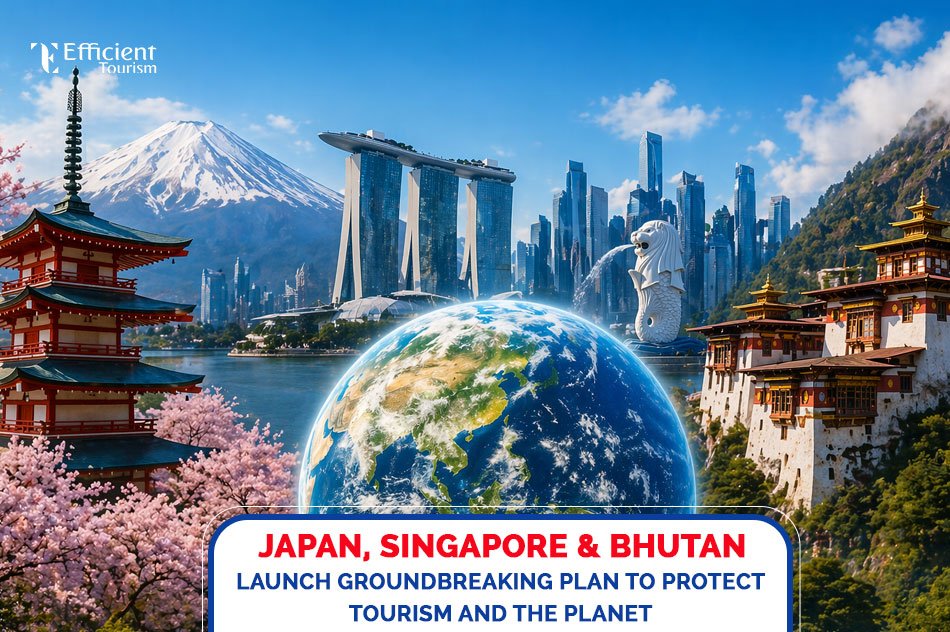
Japan, Singapore, Indonesia and Bhutan have brought a major change in tourism by bringing a unique approach in fighting the negative impact of over tourism. They have focused on protecting the environment, preserving their local cultures and supporting local communities. These countries have taken a smart step toward sustainable tourism by focusing on ecosystem healing and using technology to improve the travel experience.
How Japan is using AI to manage tourism
Japan has taken a different approach by managing the tourism by using technology and dispersing the tourist population to other lesser known spots. Most cities like Okinawa and Hokkaido have started using AI detection apps to track the crowd data and weather patterns to inform the visitors about real time crowd levels in the location. Japan is also implementing a tourism data platform that analyzes and visualizes the travel trend and informs the local authorities about it.
Its 2023 Tourism Nation Basic Plan sets out three main themes – sustainable tourism, recover inbound tourism and expand domestic travel. The plan has set a target of 100 regions working on sustainable tourism to protect nature, culture and support local communities. Japan has also started a campaign to promote the lesser known spots to inbound tourists. They’ve started promoting the lesser known destinations on their websites and through Instagram campaigns.
Japan is also actively encouraging tourists especially from business heavy markets for longer stays through workcation style travel. Tourists can now stay longer and work remotely from the remote Japan destinations. This makes Japan tour packages popular worldwide. This model is essentially turning tourists into temporary residents and thus contributing to the local economy which is far better than the day-trippers who arrive for a short time and leave.
Singapore’s city in nature tourism model
Singapore has taken a sustainability approach in tourism by building a modern city that feels environmentally responsible and tourist friendly at the same time. Its idea behind the vision “City in Nature” is to integrate nature into the city rather than building a city over the nature.
Its Tourism Sustainability Program helps tourism businesses become greener and more climate resilient. And no wonder why the demand of Singapore tour packages is rising not only in European countries but also across the globe. Singapore has build sustainability into the city itself by improving parks, green infrastructure, low carbon transport and responsible business practices.
Singapore Tourism Board actively urges the businesses to get sustainability certifications and provide funding to apply innovative systems for energy use, waste management and carbon management.
Indonesia leads the way in regenerative tourism
Indonesia has started a regenerative tourism approach to restore ecosystems, strengthen the local communities and improve the quality of the tourist destinations. Its “Green Parekraf” is a new agenda that focuses on making the tourism more sustainable by focusing on repairing the ecosystems, improving waste systems and supporting the use of renewable energy.
Indonesia’s approach is genuinely different than the other nations. Its regenerative model uses tourism as an active tool for environment healing, not just consuming. Indonesia is also channelizing its investment into major tourist hubs like Bali, Riau Islands and other “Super Priority Destinations” to protect the environment and support the local communities. That’s why Bali tour packages are among the most popular travel choices for tourists in Asian countries.
Bhutan’s high-value tourism model protects nature and culture
Bhutan has introduced a “High Value, Low Volume” tourism model to promote responsible tourism and preserve the environment and local culture. After reopening its borders in 2022, it implemented the Sustainable Development Fee (SDF) to promote quality tourism. It is a mandatory fee that every international tourist visiting Bhutan has to pay to support environmental protection, cultural preservation and eco friendly infrastructure.
This approach is meant to improve the quality over quantity. Bhutan has limited the mass tourism to protect its landscapes, heritage and local way of life. And that’s why Bhutan holiday packages continue to be in high demand among conscious travelers. Its new model turns every tourist from a passive consumer into an active conservation partner. Through this fee, every tourist is actively engaged in leaving a net positive impact in Bhutan by funding the conservation and supporting the local communities.
How tourism empowers communities through technology
The common ground in the policies of all these nations is their initiative to encourage sustainability, support the local community and use technology to improve tourism. These nations are deliberately designing systems where local communities are actively in conserving the environment and supporting the tourism. Tourism is used as a tool to improve the livelihood of the local communities by providing jobs and training and support the local businesses.
Technology is also used as an effective tool to make travel more manageable. Japan is using AI technology to manage the crowd levels at the tourist spots. Singapore has deployed to tackle the issue of waste management by introducing smart bins. Digital Passport also makes tourism easier in these countries and real time data systems help the tourists make smart planning.
Why regenerative tourism is shaping the future of travel
While traditional sustainable tourism tries to reduce the negative impact, the regenerative tourism goes a step further by actively restoring the nature and improving the well being of the local community. Japan, Singapore, Indonesia and Bhutan are not just solving the existing problems, rather they’re building a new framework for the tourism industry that benefits the ecosystem and its local community.
This shift towards regenerative tourism not only minimizes the environmental harm but also supports economic growth while preserving the culture. The choices made about tourism will impact the tourism of the future generations and their rich cultures and the environment.
How is it revolutionary
Japan, Singapore, Indonesia and Bhutan have already set an example by shifting towards a system that actively restores the environment and supports the economic growth of the local community. This revolutionary step by these nations is going to transform the travel industry and the way we experience it.
The regenerative tourism also actively involves the travelers to participate in preserving nature and help promote sustainability through tourism. Every nation should take inspiration from these nations to protect the environment and safeguard it for the next generations, so we can work together to heal the planet.
Note: Plan your Asian getaway easily with a Japan visa, Bhutan visa, and Singapore visa for a smooth multi-country journey.

